Why Circular Design Systems Matter in Custom Boxes for Packaging?
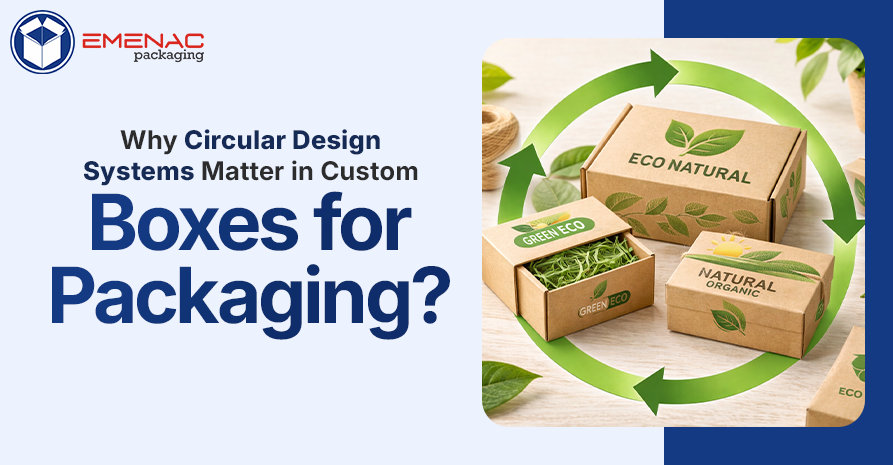
Circular design systems are revolutionising the way brands approach custom packaging boxes. The purpose is clear. Nothing is turned into waste. Everything cycles back to useful material again. This feels like a pragmatic, quantifiable, responsible shift.
In packaging, finishes, textures, and coatings can play a role in both attractiveness and recyclability. Good choices mean materials are easier to keep in circulation. Brands are experimenting with water-based inks, compostable films, and fibre-rich boards that can be recycled or upcycled.
Surveys reveal that many consumers want responsible product packaging. Circular thinking happens at all stages of conception, sourcing, use, recovery, and remanufacture. It brings together designers, converters, retailers, and consumers.
Research has shown that circular packaging solutions result in less material waste and improved brand trust. This approach builds value and reduces impact. One popular style used in returns programs is the reusable Mailer Boxes.
Circular systems are most successful when packaging facilitates recovery. Strong signals, simple separability, and minimal composition mixing ensure materials are kept valuable. Such practices increase brand perception and preserve resources.
The aim is not to do less harm. To design for perpetual use from the beginning. This philosophy also lends itself for high end Product boxes using recycled boards.
Circular Design Systems Raising the Bar for Custom Boxes Packaging
Circular design emphasises the perpetuation of closed loops rather than linear disposal. It treats packaging as a bank of resources. Designers steer clear of heavily laminated packaging that can’t be recycled. Materials flow again through collection and reprocessing.
Brands are applying lifecycle thinking to structure, finish, and inks. They streamline substrates to support higher levels of recycling. Components can be disassembled easily. This minimises contamination. It also facilitates a reuse system, whereby robust rigid containers are lent and borrowed through a network of users, thus creating a closed loop of use and recovery.
Consumer trends are moving very quickly. A lot of consumers want their packaging to be responsible. On-pack messaging helps facilitate correct disposal. Digital tags help monitor the return and reprocessing of packaging. This makes recovery more accurate and more transparent.
Circular systems also offer greater cost predictability. Materials are retained rather than discarded. Firms lessen demand for virgin materials. They build resilience in their supply chains and in their pricing. This is good for future competitiveness.
Circular System Designs: Adding Value to Custom Boxes for Packaging
The benefits of circular design go far beyond waste minimisation. It indicates that brands can form an emotional connection. Consumers feel they’re part of a responsible loop. They engage in returns, refills and reuse.
Designers painstakingly fine-tune formulas for nesting, stacking and space-saving storage. The logistics are easier. The volume of transport decreases. Research has proven that circular packaging solutions can minimise material waste and increase brand trust.
It reduces emissions by distance. Prolonged use of permanent shipping boxes can survive a few rounds in your recycling program.
Material health is vital too. Safe substrates protect people and the planet. Toxin-free chemistry and cleaner operations are promoted by circular systems. Brands are transitioning to compostable fibres, recycled board and mono-material packs.
Innovation thrives in a circular mindset. Groups investigate modular pieces, refill pods and components that come apart easily. This positive attitude encourages creativity. It makes packaging a service model rather than a disposable asset.
New Directions in Circular Packaging Design
- There’s an increasing pack up with run and re-use schemes.
- Digital deposit systems use codes to increase the rate of return and to offer immediate refunds.
- Modular packaging allows the pieces to be separated for recycling or repurposing.
- An expanding composting infrastructure is supporting moulded fibre and other certified compostable packaging.
- Chemical recycling offers new opportunities to recapture material at a high-quality, original level.
All of these trends are deepening engagement across the supply chain. Both trends also rely on a clear design intent and intelligent material selection.
Why Trends Matter?
First, they reduce waste pressure. They circulate materials rather than send them to landfills. They promote responsible consumption patterns. They also prompt brands to design for a second (and third) life right from the start.
Second, they enhance the brand’s image. Buyers value responsible conduct. Confidence increases when packaging has a clear environmental purpose. Businesses that shift to circular models can also benefit from increased loyalty and repeat purchases.
Concluding Remarks!
Circular systems connect innovative design with quantifiable results. They inform decisions around substrate, coatings, printing and construction. They champion sustainable boxes and custom printed boxes that go back to use as opposed to waste.
Emenac Packaging Australia promotes mindful design and material responsibility. The brand lays emphasis on quality, practicality and circular value creation. “Smart packaging is not thrown away. It comes back, rejuvenates and tells us that resources are valuable.”
The team supports brands in transitioning to more meaningful packaging solutions that contribute to a healthier future. Get your quote today! Contact us for more details.
Share This