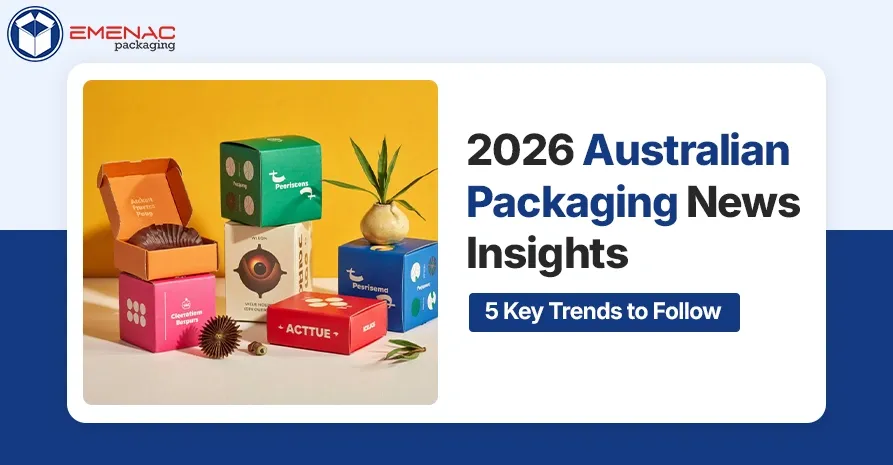
2026 Australian Packaging News Insights: 5 Key Trends to Follow
The Australian packaging industry is all set to change its course, and a massive reshape is just around the corner. With a strategic shift in regulatory changes, consumer preferences, and advancement in technology, it is predicted that the top 5 key trends are going to reorganise the market substantially in 2026.
The realignment is not limited to only one sector; it is expected to evolve from warehouses to even the factory floors. Packaging can not be overlooked as just a protection layer anymore; it’s the essential part of the sustainability and efficiency of the products being packaged.
Businesses now need to prepare in advance and redesign their materials and technology protocols for the coming years. Let’s begin with the latest packaging news!
5 Key Trends Restructuring the Packaging Industry
The Australian packaging landscape is reshaping itself according to the changing times. The following is the list of themes that will be part of the Australian packaging ecosystem in 2026.
1. Encouraging Sustainable Solutions
The consumer-focused packaging companies are taking a shift towards rebranding their companies and focusing more on sustainability. Companies are going through a testing and trial phase. The current best example is Nestlé, a familiar brand in many countries; they are currently working on major approaches across their portfolio.
For the suppliers, it simply means that they don’t just have to provide materials but also solutions, along with providing research-driven data while trading, for instance, the ratio of carbon footprint and the potential use of recyclable materials.
2. Strategic Initiatives in an Inflated Market
Since the year 2025, Australia has been witnessing a massive increase in inflation. This has greatly impacted the packaging industry and its core values. With people diverging towards more affordable products, the packaging companies must also focus on being commercial and economical, while remaining sustainable.
The transformation in 2026 accordingly is diverging more towards solutions that deliver operational savings, brand growth strategies, and long-term cost-saving models instead of completely prioritising environmental benefit and related cost.
3. Switching to Reusable Packaging
Australian packaging companies are now moving towards the refillable packaging trend, and industrial supply chains are now equipping their factories with such machinery that supports doing so.
In the warehouse, disposable bins are being replaced by reusable bins and crates. This shift has created long-term benefits in the sectors of shipping and picking processes and reduced long-term costs associated with the disposal activities. Returnable transit packaging is also being adopted by major packaging companies to cut down on single use of plastics.
4. Digital Packaging Innovations
The fourth rising pattern that is gaining momentum in Australian packaging companies is smart innovation and digital footprint. Technology is being incorporated into packaging. NFC chips, QR codes, and sensors are being placed into packaging for improving traceability and encouraging interactivity.
These new tech tools are useful for providing real-time industry insights that can help out in product management, storage precautions & supply-chain administration.
5. Next-Generation Recycling Solutions
The Australian recycling infrastructure is upgrading; new facilities now include replacing soft plastics, organics & composites. Packaging manufacturers are also developing recyclable films and wraps that are compatible with advanced recycling streams.
For packaging businesses, it implies that they now have to switch towards strapping and machine wrapping that can meet these new standards. In the long run, companies should invest in these materials to safeguard themselves against regulatory penalties and follow the latest SOPs regulated by the government.
Operational Steps to Follow in 2026
To prepare for these latest trends, we have prepared a list that you can easily follow for compliance with the new Australian packaging SOPs to grow your revenue and profitability and protect yourself from penalties.
1. Evaluate Packaging Operations:
Create a strategic blueprint to map out waste points, material storage points, and their volume.
2. Pilot Single-Material Wraps:
Go for trial and testing initially to select the best recyclable materials and protect your company from any future loss.
3. Shift to Reusable Shipping Solutions:
Deploy reusable bins and crates in a smaller quantity at first, then replace them one by one.
4. Include Innovative Tech Tools:
Use scannable labels, NFC chips, and QR codes to connect with supply chain management or even customers through interactive activities.
5. Be Wary of Regulations:
Work with suppliers who understand and adhere to Australian packaging protocols & standards.
You might be surprised to learn that the old soft plastics recycling scheme (REDcycle) has just collapsed, but new industries such as Soft Plastic Stewardship Australia are emerging, as consumers are moving towards environmentally friendly packaging materials.
The Way Forward
According to recent predictions, by 2026, the packaging industries of Australia will soon be revolutionised and will be smarter, more sustainable, and more adaptable. A sound piece of advice for manufacturers would be to use these trends as a strategic tool. One that can help save the environment, increase quality adherence & prove to be impactful for the business’s growth & productivity.
The Final Thought
We have covered the latest packaging news, insights & trends in the Australian packaging market. If you want to grow your business and emerge as an eco-friendly business, you must then comply with these new protocols. You can also contact us for any packaging queries; email us at quotes@emenacpackaging.com.au!
Share This